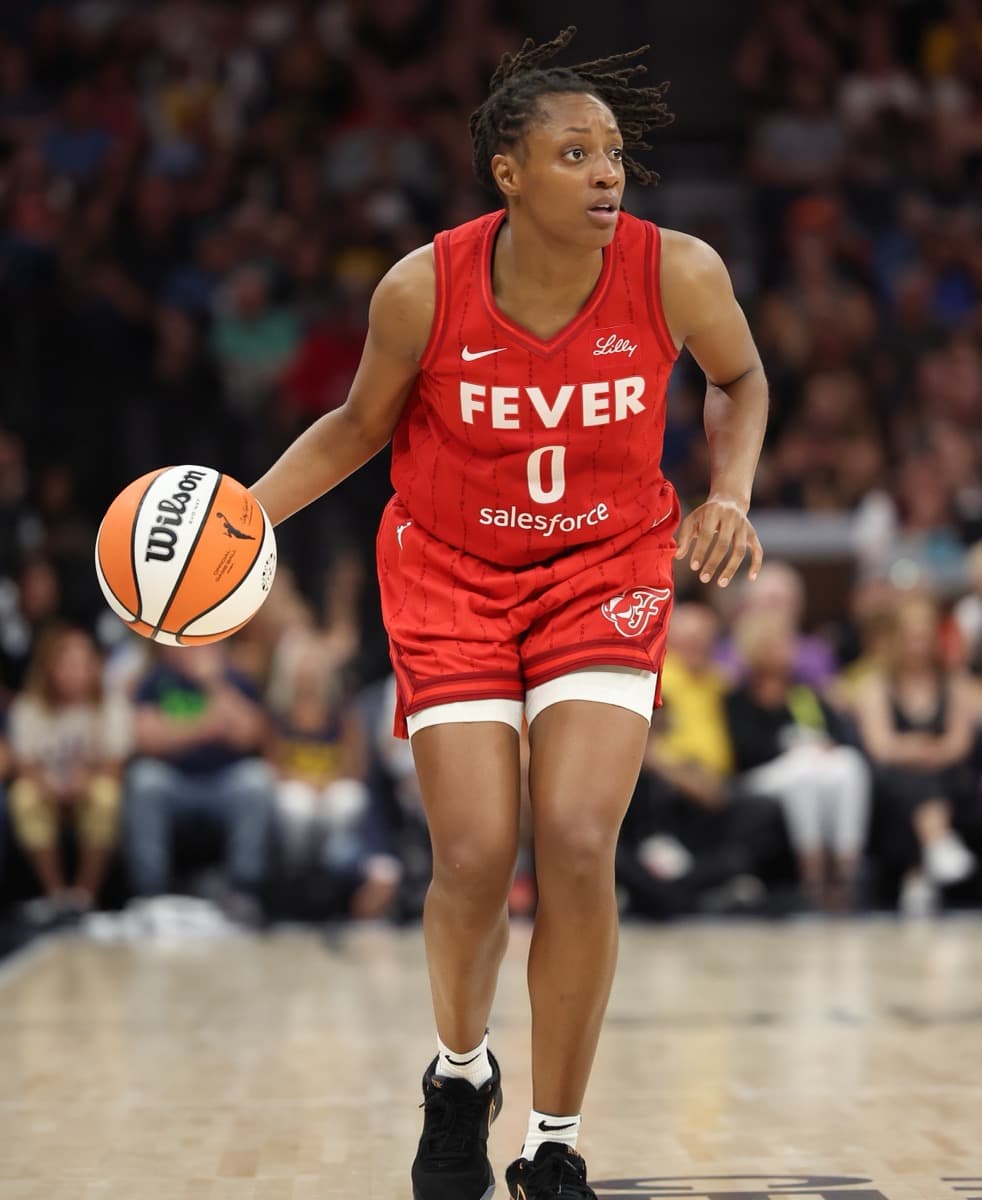
Kelsey Mitchell stayed. That is the sentence that opens any honest accounting of her career in Indianapolis. She was drafted in 2018, second overall, into a franchise that had missed the playoffs the year before and would miss them again, and again, and again. She was there for the lottery balls. She was there for the empty rows at Bankers Life. She was there for seven head coaches and a general manager carousel and the years when the Fever were on League Pass and almost nowhere else. She did not ask out. She did not leverage a trade. She kept showing up.
She arrived from Ohio State as the Big Ten's all-time leading scorer in women's basketball — 3,402 career points, a number that at the time of her graduation trailed only Kelsey Plum on the all-time NCAA Division I list. She was a six-foot guard who could shoot off the dribble, off a screen, and off the catch with the same release. She broke the NCAA all-time three-pointers record at Ohio State. The Fever, picking second behind Dallas, took her without much suspense.
The first five years in Indianapolis were the wilderness years. The team won six games in 2020, six again in 2021, five in 2022, thirteen in 2023. Mitchell averaged sixteen points a game across that stretch. She put up 18.2 a night in 2022, on a roster that won five games. The numbers were a kind of private witness. The league knew. The Fever knew. The arena did not.
Then Aliyah Boston came in 2023, and Caitlin Clark came in 2024, and Gainbridge Fieldhouse sold out, and the road games moved to NBA buildings, and the Fever became the most-watched team in the league. Mitchell — the longest-tenured Fever player on the roster by a margin of years — did not need to be introduced to any of it. She had been the one keeping the lights on. The All-Star selections finally came: 2023, 2024, 2025. Three in a row, the league catching up to what Indianapolis had been watching since she was twenty-two.
In March of 2026, after the new collective bargaining agreement opened the cap, the Fever signed Mitchell to a one-year supermax worth $1.4 million — the highest-paid contract in franchise history and, at the moment of signing, the largest single-year deal in the WNBA. The pay was overdue. The loyalty was original.
She is the bridge player. She is the only one on the current roster who can tell you what the building sounded like when it was nearly empty. The Vault keeps her here because that kind of staying does not happen by accident.